A recent piece in the Sunday Star-Times (SST) has criticised a decision of the Waitematā Local Board, of which I am the Parks portfolio lead, to consider not replacing light bulbs as they fail along the paths through Western Park between Ponsonby and Freemans Bay in advance of a full public consultation early next year on removing the lighting in that section of the park.
In a nutshell, this is because lighting can create a false sense of safety which can lead people into dangerous situations if there are not adequate sightlines into the park from the street and surrounding houses. As governors of the park, we have to ask ourselves, “are we giving people a false sense of security?” If no one can see what’s under the lights, are they actually making the space safer?
In any event, the section of the park that runs alongside Ponsonby Road will remain lit.
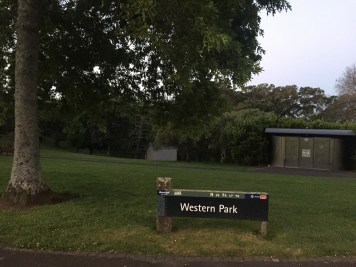
From the Ponsonby Road entrance. Note the steep drop-off.
CPTED: An Evidence-based Approach
The rationale is based on Crime Prevention Through Environmental Design (CPTED) principles on the recommendation of Council’s Community Safety team and Police. CPTED is a multi-disciplinary area of study and research, applied internationally, which aims to prevent crime through urban and landscape design. A very useful summary of the seven qualities of safer places as summarised by the New Zealand Ministry of Justice can be found here. The principle underpinning the decision in Western Park is that when a path is lit at night there is an implicit guarantee, or at the very least a strong implication, that an area is safe to walk through. But lighting is only one part of the equation. There must also be people looking on to see what is lit. To quote from the Ministry of Justice guidelines:
[properly-used lighting] ‘does not lead people into potential areas of entrapment or concealment such as dead-ends (such areas should not be lit).’
This is an approach that has been successfully used in Wellington with lights removed in Central Park and from a path in the Botanic Gardens.
In an excellent piece by Brian Rudman written in 2000, he cites a report to the Auckland City Council Parks and Recreation Committee from then-Parks Manager, Jim Doidge, on lighting in parks.
The report says that a clear message from overseas research is that “lighting alone is not the best course of action. For example, if a park is well lit at night but is not intended for use at night, or is unsafe (for design or other reasons), then lighting can encourage people to walk through an unsafe space at night.” Additionally, lighting just one route encourages use of this route by pedestrians, providing the mugger with an ideal and predictable ambush site.
“There are strong arguments for lighting paths that are well-used. However, lighting should be discouraged on isolated paths or in parks where there is no surveillance of the space from nearby houses or activities that provide passive surveillance.”
Continue reading →

 I was interviewed by bFM’s Chlöe Swarbrick (then a student journalist, later an Auckland mayoral candidate and Green Party MP) on The Wire on 20 November 2014 talking about why the Local Board is looking at removing the lights in Ponsonby’s Western Park. I discuss this further on this blog here.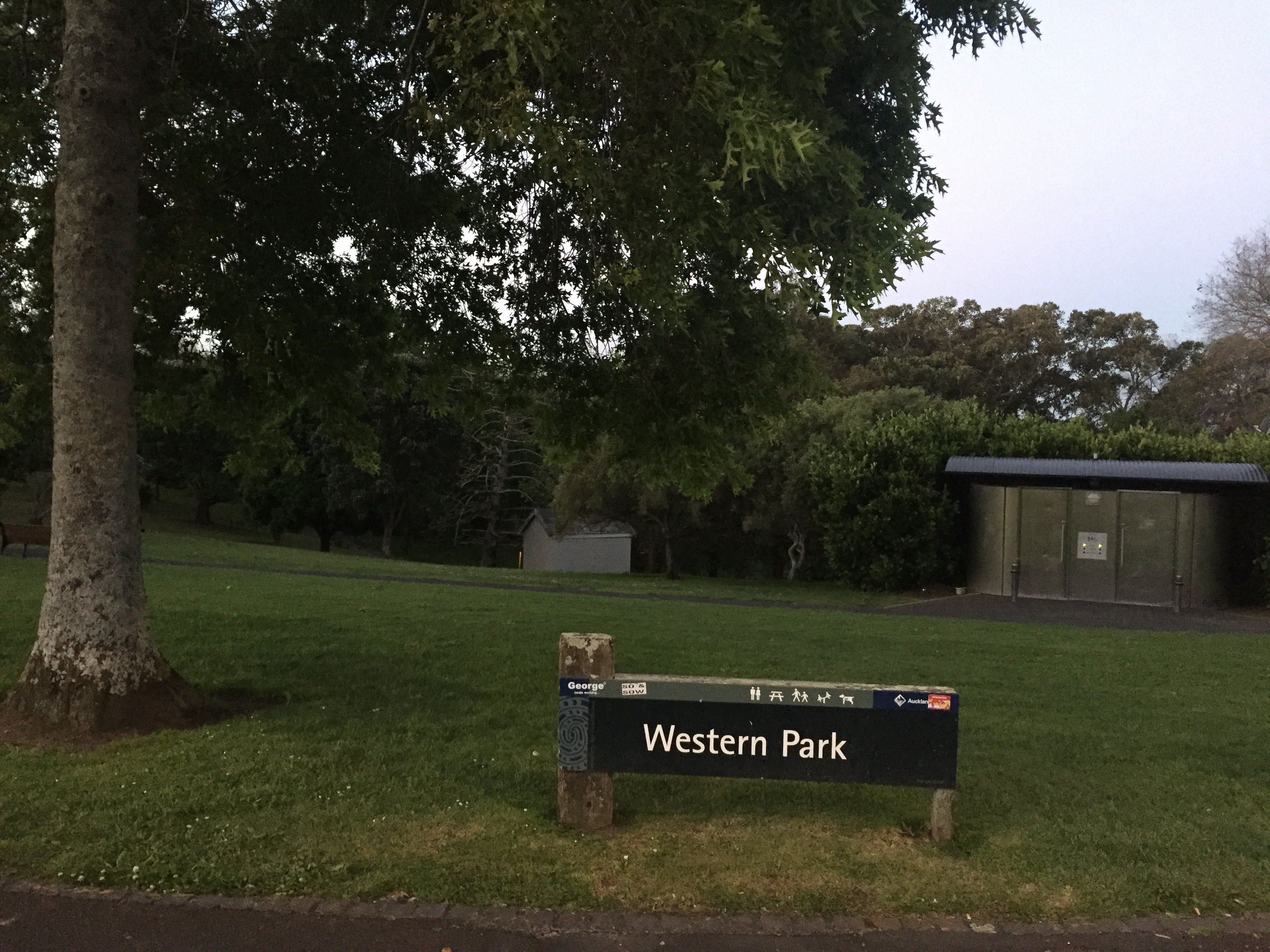




 Vernon Tava